
Cake Maker: Kids Cooking Games
Piggy Panda IncRole Playing
4.3104.00 Reviews
- Version
- 3.0
- Installs
- 10.00M
- Age Rating
- Everyone
Screenshots
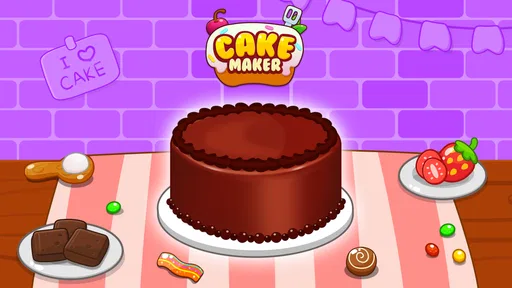
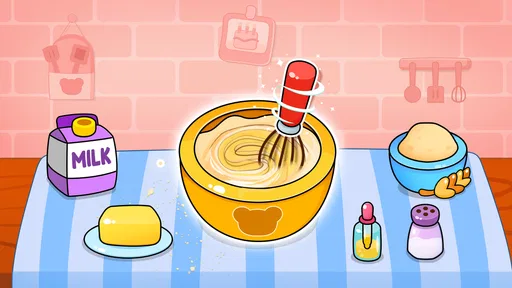



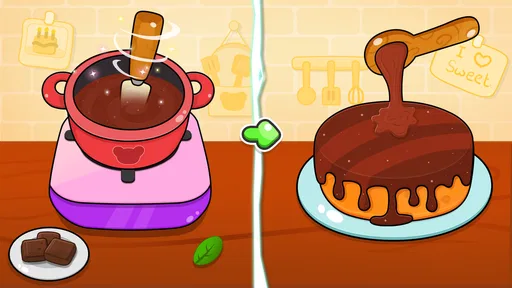
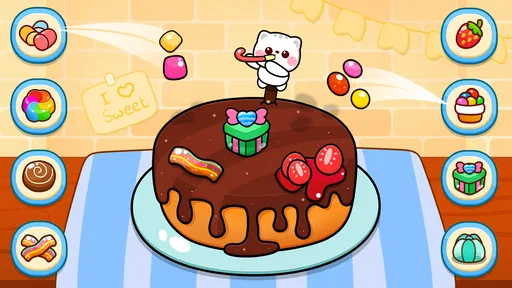

Our Review of Cake Maker: Kids Cooking Games
 Analysis by Appyee
I found Cake Maker: Kids Cooking Games to be a gentle role-playing game built around decorating and baking chocolate cakes. It is aimed at young children, but I think its appeal is broader than the age label suggests: a parent can use it for a short, quiet activity, while a child can enjoy making choices without needing reading skills or fast reflexes. The basic idea is easy to understand, and that simplicity is the main reason the game feels approachable.
My first impression was that this is less about managing a complicated kitchen and more about the pleasure of creating a cake on screen. You choose, decorate, and play through a child-friendly baking theme rather than chasing a difficult objective. That makes it a better fit for relaxed play than for anyone looking for a deep cooking simulation, a story-heavy adventure, or a competitive role-playing experience.
What the cake-making experience feels like
The game comes from Piggy Panda Inc and sits in the role-playing category, although its role-playing elements are very light compared with traditional character-based games. Here, the sense of role comes from pretending to be a baker and making decisions about a cake. I would describe it as a creative activity with game-like structure rather than a conventional RPG with combat, quests, statistics, or a long narrative.
That distinction matters when deciding whether to install it. If you expect character development, exploration, or a large world, this will probably feel too small. If you want a child to open a game and immediately understand the central activity, its focused design works much better. The store summary presents it as a cake-cooking game for toddlers, and my experience matches that positioning: the experience is deliberately uncomplicated and centered on visual interaction.
The chocolate-cake theme gives the app a clear identity. Instead of presenting a broad collection of unrelated mini-games, it keeps attention on one familiar subject. That focus can be useful for a young child who becomes overwhelmed by menus or too many choices. It also makes the game suitable for brief sessions, such as waiting at a restaurant, taking a break after preschool, or settling down before bedtime.
I especially like that the concept does not require the player to understand a complicated goal before having fun. A child can approach the game through curiosity: what does this decoration do, what will the finished cake look like, and what happens after making a choice? That kind of immediate feedback is more important here than a sophisticated progression system.
A good fit for short, supervised play
In a realistic everyday situation, I could see a parent handing over a tablet while preparing dinner. The child can spend a few minutes with the cake activity, then show the finished result when the parent is free. It is also a reasonable choice for a family device because the concept is easy for an adult to explain without giving a long tutorial.
I would still treat it as a shared or supervised activity for very young children. The age rating is Everyone, but that does not automatically mean every child will use the game independently. A toddler may understand the visual goal while still needing help with navigation, accidental taps, or deciding when to stop. The best experience will depend on the child’s motor skills and attention span rather than on the rating alone.
One useful approach is to let the child lead the creative decisions while the adult handles any confusing screen changes. That keeps the game from turning into an adult-directed task. I found that the value is strongest when the child feels ownership of the cake instead of simply following instructions from someone else.
Where the role-playing label helps and where it does not
Calling this a role-playing game makes sense only in a broad, playful way. The player takes on the role of a cake maker, but this is not the kind of RPG where choices reshape a story or where a character becomes stronger over time. That is not a flaw by itself; it simply sets the right expectation.
For a child who enjoys pretending to run a bakery, the theme can be enough. For an older child who wants missions, unlockable abilities, or a sense of long-term achievement, the experience may lose its novelty quickly. I would choose a more substantial cooking or adventure game for that audience, especially if the child already understands complex controls and wants more challenge.
The strongest part of the design is therefore its accessibility, not its depth. It reduces the number of things a child has to remember and puts the focus on decorating and baking. The trade-off is that there is less room for mastery. Once the basic interaction is understood, the game may feel more like a repeatable creative toy than a journey with meaningful progression.
Spending, progress, and pressure
The game is free to download, with in-app purchases listed at $1.99 per item. That gives families a clear starting point: the initial installation does not require payment, but spending can occur inside the app. I consider that an important detail for a children’s game because a parent should decide in advance whether purchases are acceptable on the device.
I did not find a reason to treat the purchase price as a competitive concern. This is not presented as a game where players buy power to defeat other players, climb a ranking, or gain an advantage over friends. The more relevant question is whether optional spending affects the child’s creative experience. Since each item is listed at $1.99, I would approach purchases as a convenience or content decision rather than as part of a winning strategy.
My practical advice is simple: configure the device’s purchase controls before letting a child play alone. Young children may not understand that a tap can lead to a real transaction, even when the game itself feels harmless. I would also explain that not every decoration needs to be collected immediately. That turns spending into a family decision instead of a moment of pressure.
The game’s popularity gives it some useful context. It has a 4.4 average from around 11 thousand ratings and has passed 10 million installs. Those figures suggest that many families have tried it, but they do not tell me whether a particular child will enjoy the available activities for a long time. A large audience is reassuring as a sign of discoverability, not proof that the game is a perfect fit for every toddler.
Does the game create pressure to keep playing?
In my view, the central cake-making activity is naturally low pressure. There is no obvious reason to rush through a decoration or to treat every session as a test. That is a good match for toddlers, who often enjoy repeating a familiar action more than pursuing a distant reward.
The limitation is that low pressure can also mean limited motivation for older players. A child who wants a clear sequence of goals may ask what comes next after finishing a cake. Parents should not assume that a free game with a friendly theme will automatically provide hours of structured progress. Its value is more likely to come in short bursts of creative play.
I would use it as one option in a child’s app rotation rather than as the only game on a device. It can fill a calm ten-minute gap, but it is not the right tool for teaching a full recipe, measuring ingredients, or replacing real kitchen participation. If the goal is practical cooking education, working alongside an adult with safe, simple ingredients will offer more meaningful learning.
How to make the free version work better for a family
A small amount of preparation can improve the experience. Before handing over the device, I would open the game with the child, explain which parts are available, and decide together whether any purchase will be made. If the child asks for an item, I would treat that as a chance to compare choices rather than an automatic yes or no.
Another useful habit is to give the session a clear ending. For example, the child can finish one cake and then show it to the family. This keeps the activity focused and avoids the common problem of a young player tapping through screens simply because there is no stopping point. The game works best when the adult supplies the routine that the app itself may not provide.
I also recommend paying attention to whether the child is actually making choices or merely tapping wherever the screen responds. If the activity becomes repetitive, it may be time to switch to drawing, a physical baking task, or another game with a different kind of challenge. That is not a criticism of this title; it is a reminder that a simple creative app should be used for the moments it serves well.
Fairness and what parents should evaluate
Competitive fairness is not the main issue here because the game is designed as a personal cake-making activity, not as a contest. There are no leaderboards or player-versus-player elements described in the product information, and I would not evaluate it by the standards I use for multiplayer RPGs. A child’s result is not being compared with another player’s performance.
That makes the purchase question easier in one sense. Paying for an item does not appear to be about beating another child or gaining status in a shared competition. The meaningful trade-off is between keeping the experience free and allowing access to additional individual content where a purchase is offered.
Still, fairness can matter inside a family. If one child is allowed to buy every decoration while another is asked to use only the free choices, disagreements can appear even without multiplayer features. I would set the same rule for everyone using the device. A family might choose no purchases, one occasional purchase, or a small shared budget; consistency matters more than the particular rule.
The game is also not a fair comparison with full cooking simulators. Those alternatives may offer recipes, timing, ingredient management, and consequences for mistakes. Here, the child-friendly cake focus is more forgiving and easier to enter. That is a strength for toddlers, but it means the app should not be judged as though it promises realistic culinary practice.
When another type of game is a better choice
I would skip this game if the main goal is deep progression. A child who enjoys collecting characters, solving layered puzzles, or completing increasingly difficult stages may need something with a stronger reward structure. I would also choose another option for a child who is already comfortable with reading and wants detailed instructions, because the simple presentation may feel too limited.
On the other hand, many usual alternatives in the role-playing category ask children to manage more menus, follow longer stories, or react to more demanding challenges. Compared with those games, this one has a much lower entry barrier. A young player can engage with the central idea without learning a complex control system first.
It is also a better choice than a competitive game when the family wants to avoid winning pressure. There is no need to compare scores or explain why another player is ahead. The child can focus on making a cake that looks pleasing to them, which is a healthier fit for a quiet creative break than a game built around constant performance.
Questions I would answer before installing
Would I install it for a toddler? Yes, if the child enjoys pretend cooking and the family is comfortable supervising a free game with optional purchases. I would not install it expecting a complete educational cooking course or a long-form RPG.
Can a child use it without help? Some children will manage the basic interaction, but very young players may still need an adult nearby. The Everyone rating supports its broad accessibility, not a promise that every toddler can navigate every screen alone.
Is it suitable for a child who dislikes chocolate themes? Probably not as a first choice. The cake focus is the identity of the game, so a child who prefers vehicles, animals, or open-ended drawing may get more from another app.
Will it remain interesting for a long time? I would expect the answer to depend heavily on the child. Repetition can be enjoyable for toddlers, while older children may want more goals. I would download it as a short-session activity, not as a guaranteed long-term favorite.
Does a purchase seem necessary to understand the game? The app is free to download, and purchases are listed separately at $1.99 per item. I would begin without spending, watch how the child uses the available experience, and only then decide whether an item adds enough value for your family.
My trust verdict after using it
I came away seeing Cake Maker: Kids Cooking Games as a straightforward creative game with a clear audience. Piggy Panda Inc has kept the idea easy to grasp, and the chocolate-cake theme gives toddlers a familiar pretend-play setting. The app’s strongest qualities are its gentle pace, approachable concept, and suitability for short moments when a child wants to make something on a screen.
Its weaknesses are closely connected to those strengths. The simplicity that helps a toddler begin may leave an older child wanting more structure. The role-playing label should not lead anyone to expect a traditional RPG, and the free-to-play model means parents should think about purchase controls before sharing the device.
The current version is 2.8, and it runs on Android devices using version 8.0 or later. For families with a compatible device, the technical entry point is therefore fairly practical, but I would still check the device personally before a child’s first session and make sure the purchase settings match the household rules.
My recommendation is to treat this as a small creative toy, not a complete cooking curriculum or an ambitious role-playing adventure. It is worth trying for a young child who likes decorating cakes and benefits from simple, low-pressure play. I would pass on it for children seeking competition, detailed recipes, or deep progression. Used with realistic expectations and sensible spending boundaries, it can be a pleasant little activity rather than an app that demands too much from either the child or the parent.
Privacy and Permissions
See what permissions an app requests and how it handles your data.
- Other
- view network connections, full network access, prevent device from sleeping
Verdict
Strengths of Cake Maker: Kids Cooking Games
- Simple controls make it easy for young children to play independently.
- Bright visuals and playful animations keep cooking sessions engaging.
- Multiple cake decorations encourage creativity and personal expression.
- Short activities suit quick play sessions and limited attention spans.
- Child-friendly gameplay avoids difficult challenges and complicated instructions.
Limitations of Cake Maker: Kids Cooking Games
- Some content may feel repetitive after several play sessions.
- Extra decorations or features may require in-app purchases.
- Ads can interrupt play depending on the device and app version.
- Limited educational depth beyond basic cooking-themed entertainment.
- Younger children may need supervision when using purchase-enabled devices.
Other Releases by Piggy Panda Inc
View All
Car Makeover: ASMR Games
Role Playing4.3

Kids Coloring Pages For Boys
Educational4.6

Pizza Maker Kids Cooking Games
Role Playing4.6

ABC Games: Tracing & phonics
Educational4.4
Similar Picks in This Category
View All
Hair Dye
CrazyLabs LTD4.4

Monster High™ Beauty Salon
CrazyLabs LTD4.5

Bus Simulator - Bus Games 3D
Jima Apps4.4

Flight Pilot: 3D Simulator
Wildlife Studios4.1


Super Stylist Fashion Makeover
CrazyLabs LTD4.4
Frequently Asked Questions
What is Cake Maker: Kids Cooking Games?
Cake Maker: Kids Cooking Games is a colorful, child-friendly baking game in which players prepare and decorate virtual cakes. Children can choose ingredients, mix the batter, bake the cake, and add icing, candies, fruit, and other decorations. The simple controls and cheerful presentation make it suitable for young players who enjoy creative cooking activities and pretend-play experiences.
Is Cake Maker: Kids Cooking Games suitable for children?
The game is designed primarily for children and uses straightforward tap-and-drag controls that are easy to understand. There are no complicated recipes or time-sensitive challenges that require advanced gaming skills. However, parents should still check the recommended age rating, privacy information, and available parental controls, since the exact content and advertising experience may vary depending on the device and version installed.
Does Cake Maker: Kids Cooking Games require an internet connection?
Basic cake-making activities may be playable without a constant internet connection, which is convenient for travel or offline play. Nevertheless, some features can depend on connectivity, particularly advertisements, optional content, updates, or links to other services. It is a good idea to launch the game once while online, then test its main cooking and decorating activities in airplane mode.
Are there in-app purchases or advertisements in Cake Maker: Kids Cooking Games?
The game may include advertisements or optional purchases, depending on the platform, region, and current release. These can potentially unlock extra ingredients, decorations, or remove advertising. Before allowing a child to play, adults should review the store listing and configure purchase restrictions through Android or iOS parental controls. This helps prevent accidental purchases and limits exposure to unsuitable external content.
What can children do in the game, and is it educational?
Players can usually follow a playful cake-making process by selecting ingredients, combining them, baking the mixture, and decorating the finished dessert. The game is mainly intended for entertainment rather than formal education, but it can encourage creativity, color recognition, sequencing, and hand-eye coordination. It should be viewed as a casual pretend-cooking activity, not a substitute for supervised real-world cooking or structured learning.
Play our best games!


